
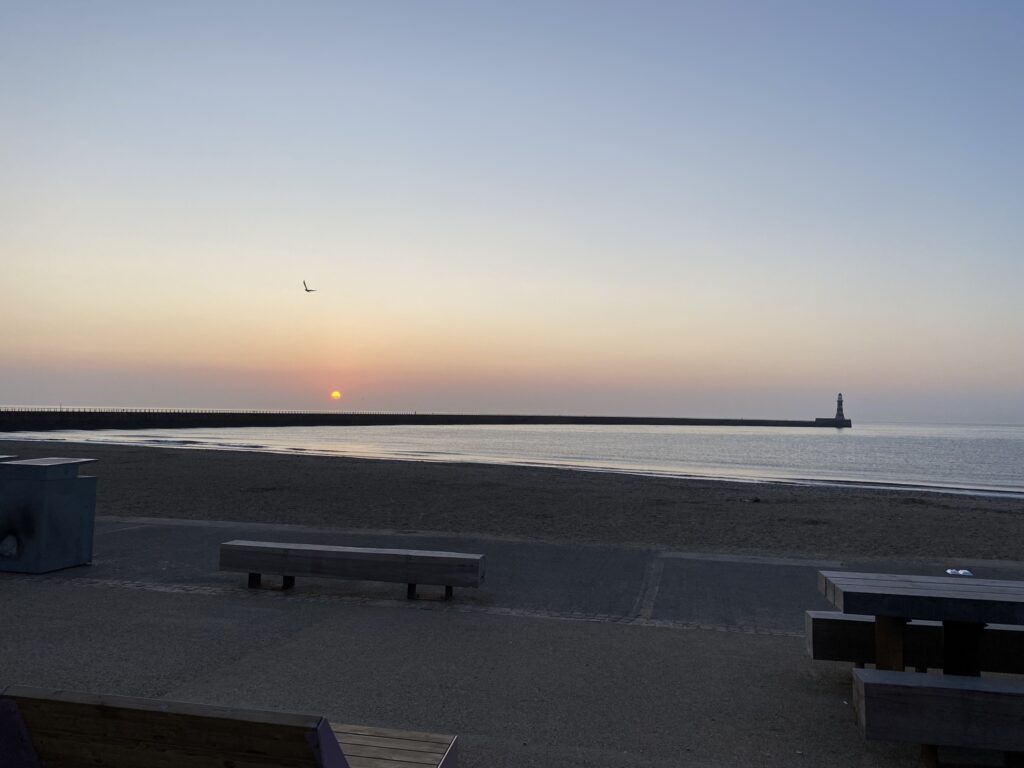
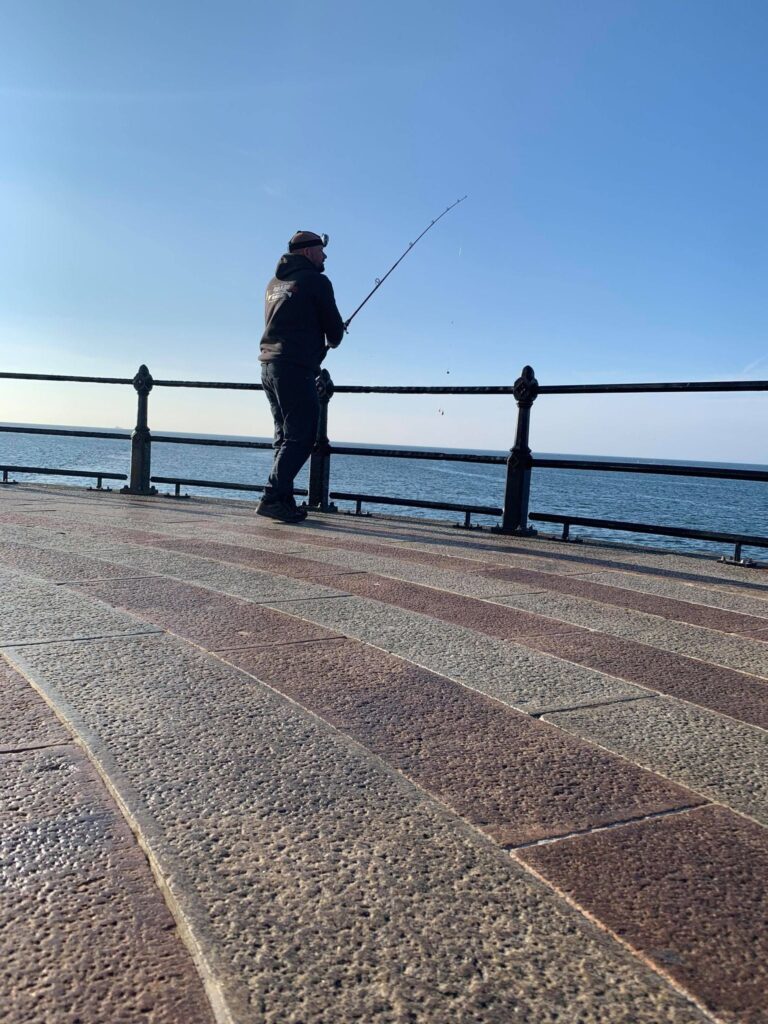
There’s something special about an early summer start on Roker Pier. Before the dog walkers appear, before the tourists gather around the lighthouse, and before the wind picks up off the North Sea, the pier belongs to the anglers. Quiet, calm, and full of possibility.
The alarm goes off long before sunrise. A flask of coffee, a bait bucket rattling in the boot, rods already rigged from the night before. By the time you roll into the seafront at Roker, the sky is only just beginning to lighten over the harbour mouth.
Getting There & Parking
Roker Pier sits on the Sunderland coastline at the mouth of the River Wear and is easy to reach from both the A19 and Sunderland city centre.
Best Parking Postcode
SR6 0ZZ — Harbour View / Marine Walk car park beside the pier entrance.
Alternative nearby postcode:
SR6 0PL — Adventure Sunderland building near the harbour side.
Arriving early is highly recommended. At dawn there’s usually plenty of parking available, and the peaceful walk down the pier before the town wakes up is part of the experience itself.
Directions to Roker Pier
From the A19
- Leave the A19 at the A183 Sunderland/Seaburn turn-off.
- Follow signs for Roker Seafront.
- Continue along Whitburn Road until you reach the coast.
- Turn onto Marine Walk and follow the road towards the harbour.
From Sunderland City Centre
- Head north towards Roker and Seaburn.
- Follow the coastal road through Roker.
- Continue along Marine Walk to the pier entrance and harbour parking area.
The pier itself stretches far out into the North Sea, offering deep water, rough ground, kelp-covered walls and calmer harbour water all within easy reach. That variety is exactly why it’s such a brilliant summer species-hunting venue.
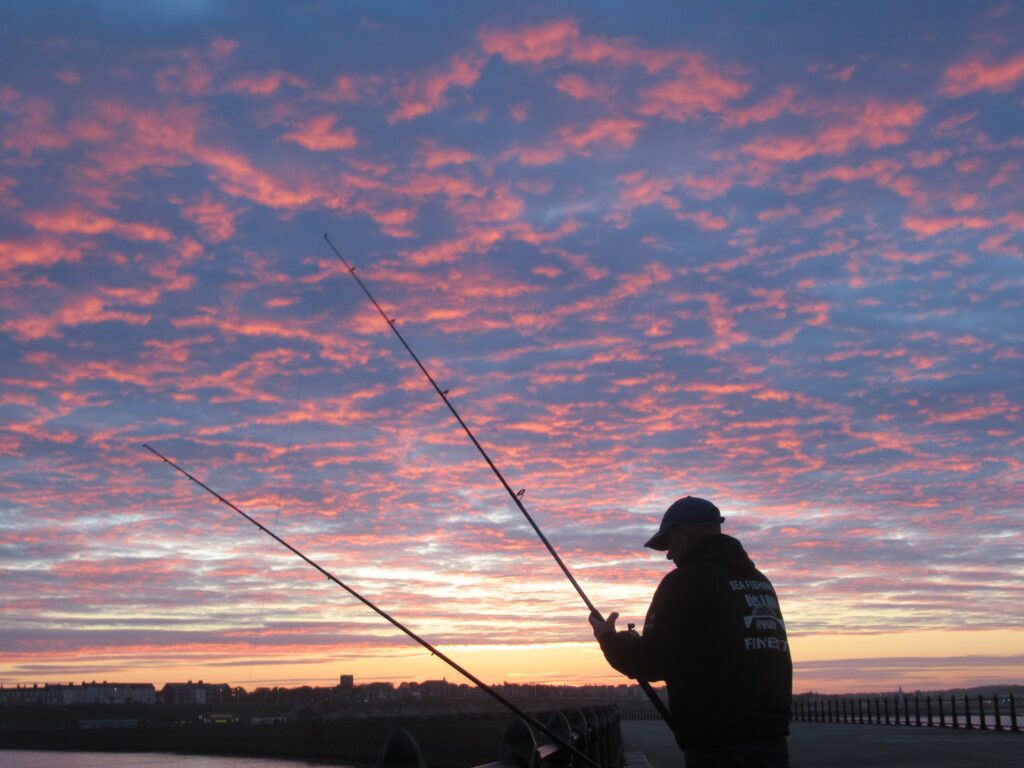
Two Rods, Two Different Games
Summer species hunting here is all about keeping things simple and enjoyable.
One rod is the “big” rod — a light beachcaster or bass rod fished at distance with a two-hook flapper or pulley rig. Nothing fancy. Small strips of mackerel, ragworm, or mussel tipped onto size 1 or 1/0 hooks. This rod sits quietly in the rest, casting out into deeper water while you wait for the rattle of a codling, dab, or coalfish.
The second rod is where the real fun begins.
A tiny spinning rod or short estuary rod, lowered straight down the pier wall, fishing inches from the rocks. Tiny hooks. Tiny baits. Little scraps of ragworm or slivers of mussel no bigger than a fingernail. Proper scratching tactics.
This is where the hidden life of the pier reveals itself.
Every drop feels different. Tiny taps transmit straight through your rod and line. Sometimes the bait barely settles before something grabs it.
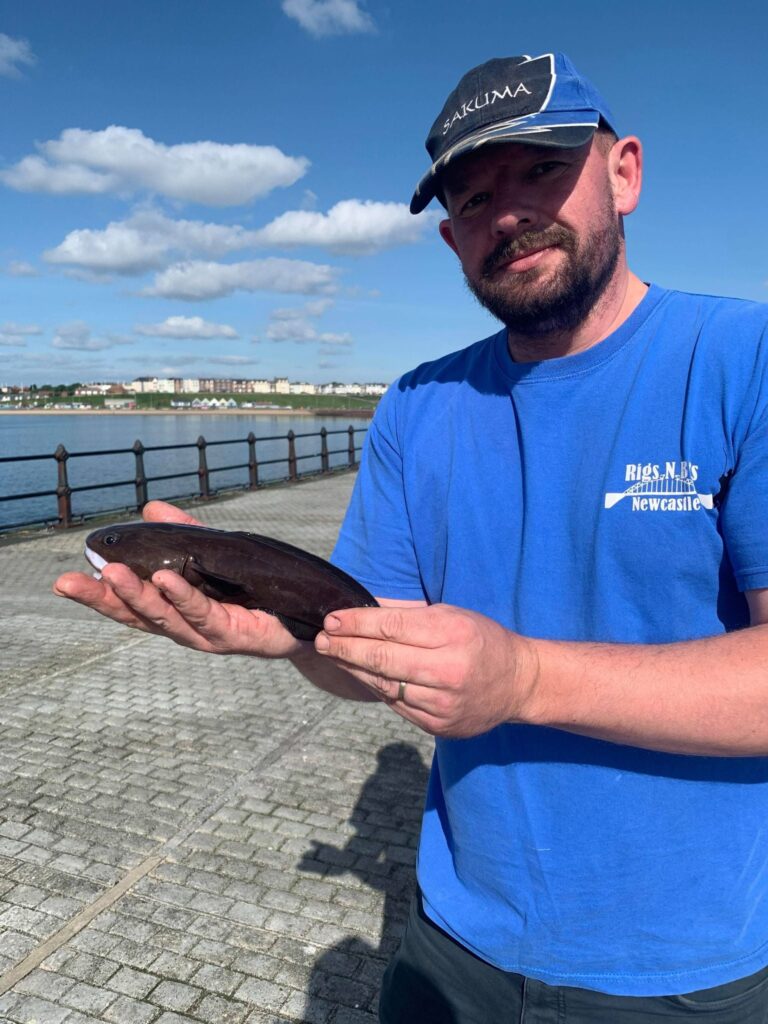
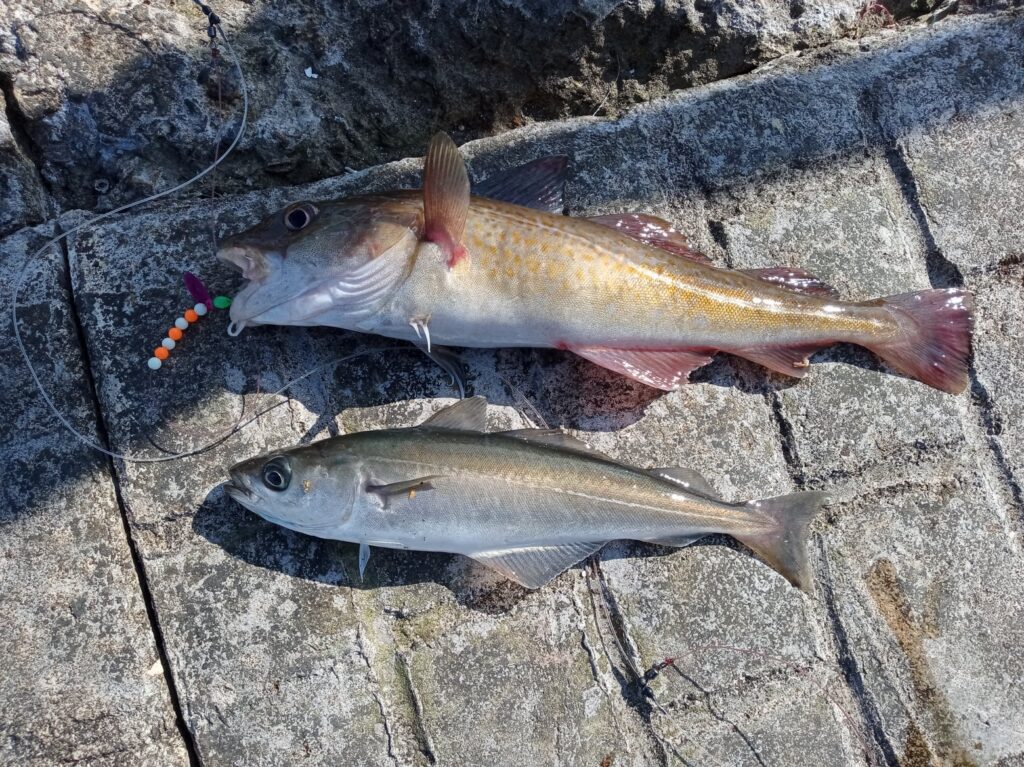
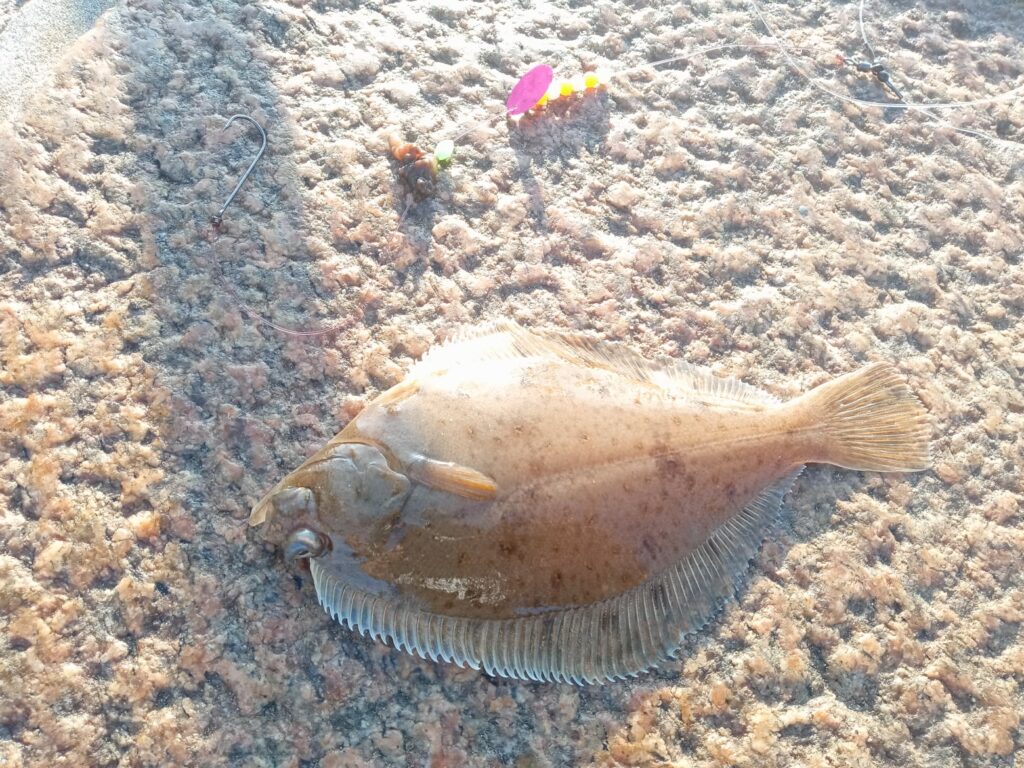
One minute it’s a tiny dab fluttering into view. The next it’s a codling no longer than your hand, bronze-backed and full of attitude. Then comes the strange stuff — the fish most anglers never even notice.
A long-spined sea scorpion appears from the gloom, all oversized head and prehistoric spikes. Ugly in the best possible way. Despite their fierce appearance, long-spined sea scorpions are not poisonous and can be carefully handled without any problem, although those sharp spines still deserve a bit of respect when unhooking them.
Then another drop produces a tadpole fish, wriggling and eel-like, looking more like something from a rockpool than the North Sea.
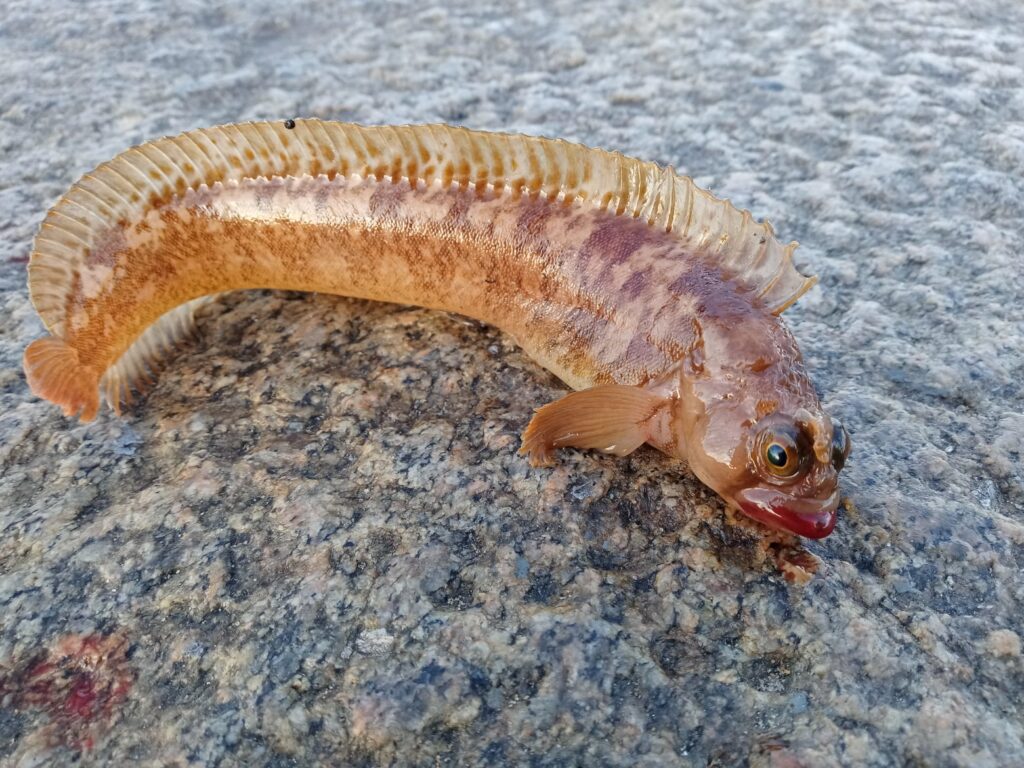
And best of all, tucked right against the slimy wall, comes a Yarrell’s blenny. Beautiful little fish with character far bigger than their size. Big eyes, curious faces, and colours that seem to change in the sunlight.
One of the best things about species hunting on Roker Pier is staying mobile. If things go quiet for twenty minutes or so, simply move along the pier and try another section. Sometimes just moving ten or fifteen yards can completely change what’s beneath you. One area might hold tiny coalfish and dabs, while another could suddenly produce blennies or sea scorpions hiding amongst the weed-covered rocks.
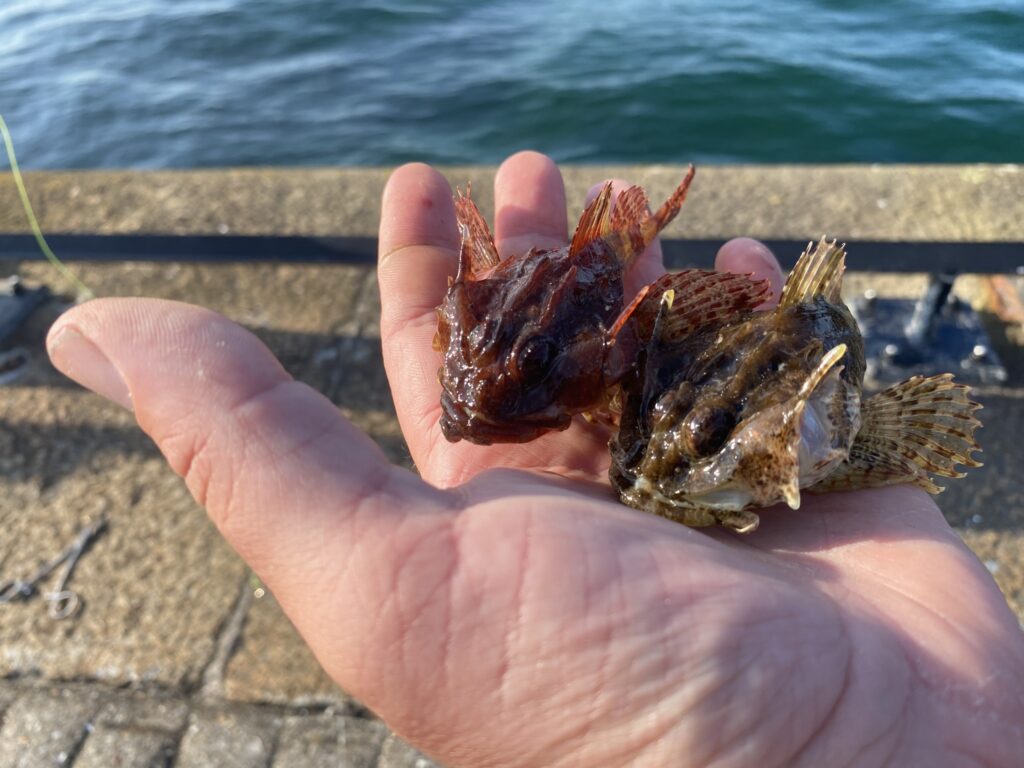
That constant searching is part of the enjoyment. You’re not just waiting for fish — you’re hunting for species.
These are the fish that make species hunting addictive.
You stop caring about size. Every capture feels interesting. Every drop might produce something different.
The Quiet Side of Sea Fishing
That’s the beauty of summer mornings on Roker Pier. It isn’t always about hauling in big fish.
It’s about slowing down.
Watching the harbour wake up. Listening to kittiwakes nesting around the lighthouse. Drinking coffee while the sea lies flat calm beneath the pier.
The occasional codling rattles the distance rod while you’re distracted unhooking another mini species at your feet. Dabs slide across the surface like wet leaves. Tiny coalfish dart around the wall. Everything feels alive.
And somehow, those peaceful summer sessions often stay with you longer than the big winter cod days.
No pressure. No crowds. No freezing northerlies.
Just two rods, tiny hooks, a quiet pier, and the excitement of never knowing what might come up next.
If you enjoy light tackle species fishing, Roker Pier is well worth an early morning visit during the summer months. You never quite know what might turn up next.
My Recommended Species Set-Up & Fish Found Around Roker Pier
My recommendation for a simple but effective summer species set-up on Roker Pier is to fish two completely different rods to cover both the deeper water and the ground right beneath your feet.
For the bigger rod, a simple two-hook flapper with sz 1 hooks baited with black lug tipped with small strips of mackerel is hard to beat. It gives you a good chance of codling, dabs, coalfish and the occasional better fish while still keeping bites coming through during quieter spells.
For the scratching rod, a tiny two-hook flapper with size 12 hooks works perfectly down the pier wall. Tiny baits are the key. Small sections of black lug and tiny pieces of cockle usually produce the best variety of species.
That combination is normally enough to cover a really good range of fish that can be found around Roker Pier during the summer months.
A few of the species I’ve personally caught up and down the pier over the years include:
- Codling
- Coley
- Whiting
- Pouting
- Pollack
- Common blenny
- Yarrell’s blenny
- Corkwing wrasse
- Ballan wrasse
- Long-spined sea scorpion
- Common eel
- Haddock
- Mackerel
- Launce
- Dogfish
- Dab
- Flounder
- Tadpole fish
…and plenty more besides.
That variety is what makes summer species hunting on Roker Pier so enjoyable. Even on quieter days there’s always a chance of finding something interesting by fishing light tackle close to the wall and staying mobile along the pier.
